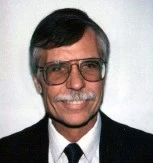
| Wayne
E. Coates. PhD., P.E. is named to the CSAE/SCGR grade of Fellow in recognition
of his contributions to the design and testing of agricultural equipment
for both conventional and new crops. He is currently a research professor
at the University of Arizona.
Dr. Coates has nearly 30 years of agricultural engineering experience working in government and university positions. He began his career with Agriculture Canada following receipt of his PhD from Oklahoma State University in 1973. He was one of the original employees of PAMI. During this time he helped develop many of the original test programmes, was responsible for the computing and data acquisition facilities, was the engineer in charge of several field test programs, and was responsible for conducting all of the early ROPS certifications which were done using FEA. In 1981 Wayne joined
the faculty of The University of Arizona as an associate professor in
the Soils, Water and Engineering Department. Later he was promoted to
full professor and then to research professor, changing departments in
1994 when he joined the Office of Arid Lands Studies. In 1993 he was appointed
an adjunct faculty member at the University of Catamarca, Argentina. Dr. Coates' work with traction led to a contract from NASA, which was issued through the Jet Propulsion Laboratory, in which he conducted tests of a half scale wheel, which was being proposed, for the Martian lander. In addition to conducting the traction and sinkage tests in a soil bin, the project involved determination of what material would best represent Martian "soil," using only photographic information that had been sent back from one of the voyager missions. Dr. Coates new crop research has required travel to many countries primarily the middle east and South America, where he has worked with local growers and fabrication shops building and testing equipment suitable for local conditions. Some of the crops he has worked with are jojoba, lesquerella, vernonia (oil crops), kenaf and hesperaloe (fiber crops), chia (edible oil and fiber), guayule (rubber and latex). Through his collaborative work with growers and other researchers chia has been elevated from a virtually unknown ancient crop in 1990, to one, which is being commercially grown in Argentina and Bolivia today. Throughout Wayne's career he has been a member of a number of professional societies, and has served on numerous committees, as well on the Board of Directors of several of these organizations. In 1997 he received the outstanding researcher award from the Association for the Advancement of Industrial Crops for his new crop work. Currently, Dr. Coates is volunteering his services as the Webmaster for CSAE/SCGR. |